← Back to home
Search Adaptapedia
Books & Adaptations
(4 results)
From the author of Jurassic Park, Timeline, and Congo comes a psychological thriller about a group of scientists who investigate a spaceship discovered on the ocean floor. In the middle of the South Pacific, a thousand feet below the surface, a huge vessel is unearthed. Rushed to the scene is a team of American scientists who descend together into the depths to investigate the astonishing discovery. What they find defies their imaginations and mocks their attempts at logical explanation. It is a spaceship, but apparently it is undamaged by its fall from the sky. And, most startling, it appears to be at least three hundred years old, containing a terrifying and destructive force that must be controlled at all costs.
"All Quiet on the Western Front" by Erich Maria Remarque is a powerful and poignant novel that explores the harrowing experiences of soldiers during World War I. First published in 1929, the book is narrated by Paul Bäumer, a young German soldier who enlists in the army with his classmates, driven by a sense of patriotism and idealism. However, as the story unfolds, Paul and his friends quickly come to face the brutal realities of war, which shatter their youthful illusions. The novel provides a firsthand account of the horrors of trench warfare. Through Paul's eyes, readers witness the physical and emotional toll that war takes on soldiers. The graphic descriptions of battles, injuries, and death serve to highlight the senselessness of conflict and the loss of human life. Remarque's writing captures the chaos and fear that permeate the battlefield, immersing readers in the intense atmosphere of war. One of the central themes of "All Quiet on the Western Front" is the disillusionment experienced by soldiers. As Paul and his comrades endure relentless suffering, they begin to question the values and beliefs that led them to enlist. The camaraderie among the soldiers becomes a vital source of support, as they navigate the challenges of survival together. However, the novel also illustrates how war ultimately alienates them from their former lives and identities. Paul struggles to reconcile his experiences with the expectations of society, feeling increasingly disconnected from the world he once knew. The impact of war on mental health is another significant aspect of the novel. Remarque portrays the psychological scars that soldiers carry long after the fighting has ceased. Paul grapples with feelings of despair, hopelessness, and trauma, reflecting the broader struggles faced by veterans. The novel emphasizes that the effects of war extend beyond the battlefield, haunting those who survive and shaping their futures in profound ways. "All Quiet on the Western Front" also critiques the romanticism often associated with war. Through Paul's journey, Remarque challenges the glorified notions of heroism and sacrifice, revealing the grim reality of combat. The novel serves as a powerful anti-war statement, urging readers to confront the true nature of conflict and its devastating consequences. Remarque's poignant prose and vivid imagery compel readers to empathize with the soldiers' plight, fostering a deeper understanding of the human cost of war. In addition to its exploration of the soldier's experience, the novel delves into the broader societal implications of war. Remarque critiques the political and military leaders who send young men to fight, often without a true understanding of the consequences. The indifference of those in power is juxtaposed with the suffering of the soldiers, highlighting the disconnect between the ruling class and the realities faced by those on the front lines. The novel's impact has endured over the decades, resonating with readers across generations. It has been translated into numerous languages and adapted into various films and stage productions, further solidifying its place in literary history. "All Quiet on the Western Front" remains a vital work that speaks to the universal themes of loss, trauma, and the search for meaning in the face of adversity. "All Quiet on the Western Front" by Erich Maria Remarque is a profound and moving exploration of the experiences of soldiers during World War I. Through the eyes of Paul Bäumer, readers are confronted with the harsh realities of war, the disillusionment that follows, and the lasting impact on mental health. The novel serves as a powerful reminder of the human cost of conflict and the need for empathy and understanding in times of war. Its enduring relevance and emotional depth make it a must-read for anyone seeking to comprehend the complexities of the human experience in the face of violence and suffering.

NEW YORK TIMES BESTSELLER • The novel that redefined the science fiction genre, starring a team of scientists who must uncover what killed the citizens of a sleepy desert town—and stop the deadly contagion before it creates a catastrophe. "I love anything Michael Crichton writes."—Stephen King A military space probe, sent to collect extraterrestrial organisms from the upper atmosphere, is knocked out of orbit and falls to Earth. Twelve miles from the crash site, an inexplicable and deadly phenomenon terrorizes the residents of a sleepy desert town in Arizona, leaving only two survivors: an elderly addict and a newborn infant. The United States government is forced to mobilize Project Wildfire, a top-secret emergency response protocol. Four of the nation’s most elite biophysicists are summoned to a clandestine underground laboratory located five stories beneath the desert and fitted with an automated atomic self-destruction mechanism for cases of irremediable contamination. Under conditions of total news blackout and the utmost urgency, the scientists race to understand and contain the crisis. But the Andromeda Strain proves different from anything they’ve ever seen—and what they don’t know could not only hurt them, but lead to unprecedented worldwide catastrophe.
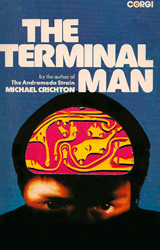
From the bestselling author of Jurassic Park, Timeline, and Sphere comes a neurological thriller about the dangers of cutting-edge medical experimentation. Harry Benson suffers from violent seizures. So violent that he often blackouts when they take hold. Shortly after severely beating two men during an episode, the police escort Benson to a Los Angeles hospital for treatment. There, Dr. Roger McPherson, head of the prestigious Neuropsychiatric Research Unit, is convinced he can cure Benson with an experimental procedure that would place electrodes deep in his brain’s pleasure centers, effectively short-circuiting Harry's seizures with pulses of bliss. The surgery is successful, but while Benson is in recovery, he discovers how to trigger the pulses himself. To make matters worse his violent impulses have only grown, and he soon escapes the hospital with a deadly agenda. . .